
Brewing Coffee At Home: What Is The Best Coffee Brewing Method?
This is one of the most controversial subjects among coffee lovers. The pros will talk about next level equipment while the newbies will be happy with a pre-ground coffee, a French Press and a brewing guide.
Taste is subjective and there is never a right or wrong when it comes to brewing coffee.
With that in mind, we took the liberty to make this blog an essential guide for brewing coffee at home with the ratios we found work best (but don’t take our word for it. Experiment and find your own ‘right’ setting).
French Press Guide For Brewing Coffee At Home
A classic brewing method that’s been around since 1890. Invented by mistake but definitely used with propose by many households around the world.
It brews a rich, intense and creamy cup of coffee. If you like a full-bodied cup, then look no further and start experimenting with the French Press.
What you need:
If you grind your own coffee, make sure it’s ground coarsely, like sea salt. Alternatively, you can buy it pre-ground. Just select Cafetiere from the drop-down menu.
French Press Brewing Instructions
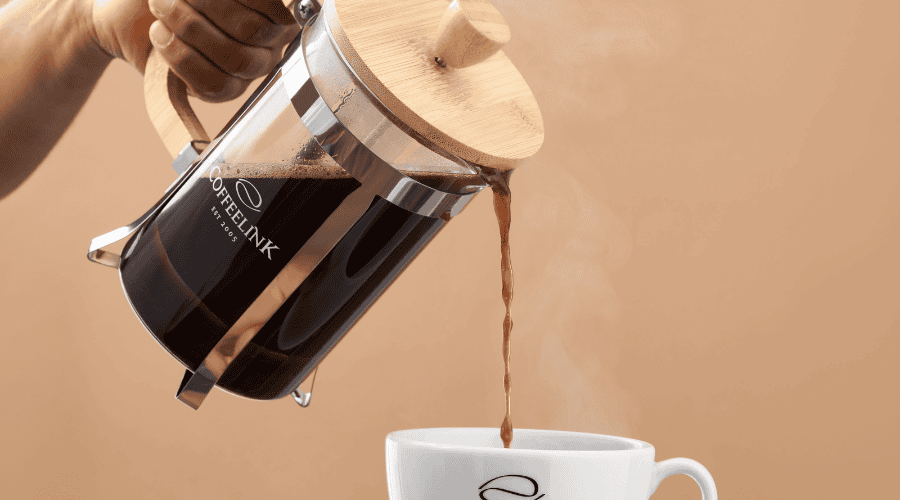
Measure and grind your coffee Use about 18 g of fresh coffee beans (or pre-ground coffee) and grind coarsely, like sea salt.
Add coffee to the cafetière Place the coffee grounds in the bottom of the French press.
Pour the water Slowly pour hot water just below boiling over the grounds in a circular motion, making sure all the coffee is evenly saturated.
Brew Let the coffee steep for about 4 minutes (3–5 minutes depending on how strong you like it).
Plunge and serve Place the plunger lid on and press down slowly and steadily. Pour immediately and enjoy your coffee!
Pour Over Guide For Brewing Coffee At Home
The pour over is one of the most popular methods among beginners, but it’s definitely still the go-to for all coffee aficionados.
It brews a smooth, clean cup of coffee that’s easy to drink. Another great benefit? Any coffee origin will taste amazing using a dripper, so allow yourself to try all that the world of coffee has to offer. You won’t be disappointed.
Pour Over Brewing Instructions:
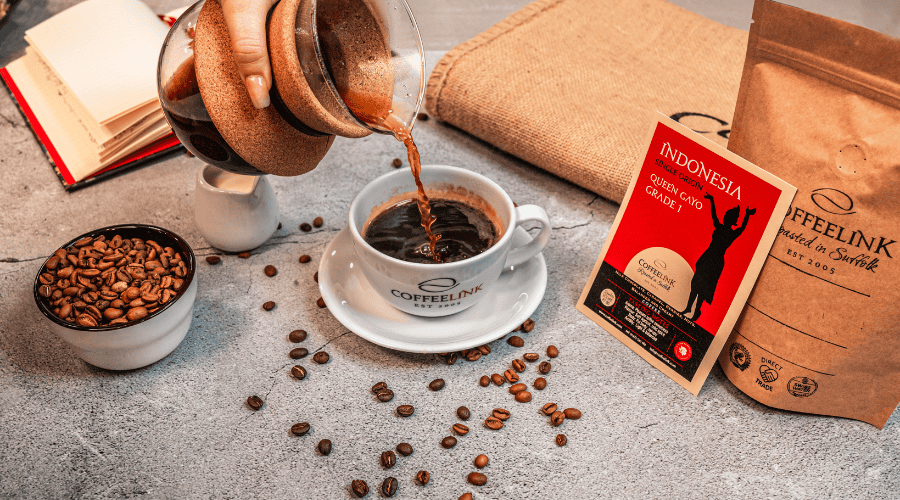
Measure and grind your coffee Use about 18 g of fresh coffee beans and grind to a medium consistency. For pre-ground coffee, make sure it’s medium grind.
Prepare the dripper Place a paper filter in your coffee dripper and rinse it with boiled water to remove any papery taste and preheat the dripper. Preheating your cup is also recommended to maintain temperature.
Bloom the coffee Add the ground coffee to the filter. Pour 70–100 ml of hot water in circular motions to saturate all the grounds evenly. Let it sit for about 30 seconds—this is called the bloom.
Continue brewing Pour the remaining water in 100 ml increments, waiting about 10 seconds between each pour.
Serve and enjoy Once all the water has passed through, remove the dripper and enjoy your freshly brewed pour-over coffee.
AeroPress Brewing Guide
Can’t decide between filter coffee and espresso? Luckily, we have the best mash-up brewing method that combines the qualities of both: the AeroPress.
It brews an acidic, bright cup of coffee that resembles an espresso, but somehow smooth like a pour over.
AeroPress Brewing Instructions:
Heat water Boil water, then let it rest for about a minute until it’s between 175–195°F.
Grind coffee Measure 2 AeroPress scoops of beans and grind to a fine sugar consistency.
Prepare filter Insert a paper filter into the cap, place it on your mug, and drizzle with warm water to wet it.
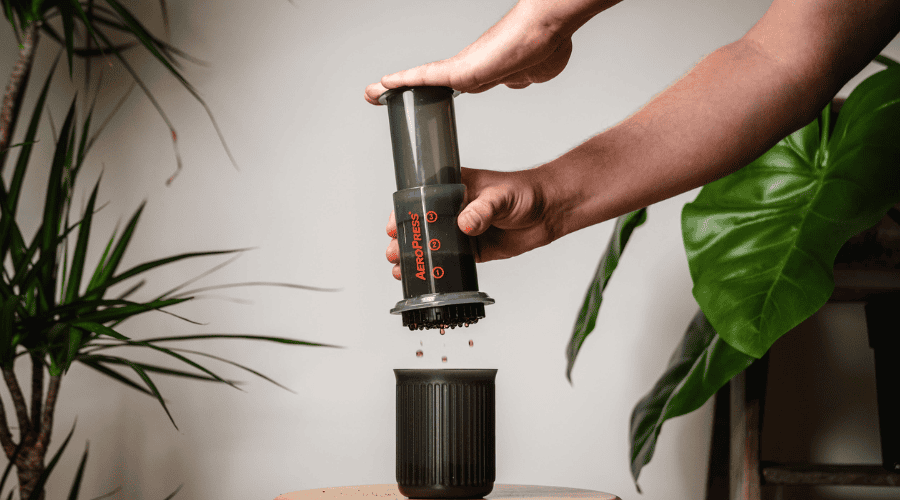
Add coffee and water Place the AeroPress on the mug, add the coffee, then pour water to the top line. Stir once briefly.
Press Insert the plunger and press firmly and slowly until you hear a long hiss.
Serve Enjoy as a concentrated cup, or split between two cups and dilute with hot water if desired.
Moka Pot Brewing Guide
A stovetop coffee maker for brewing coffee at home makes a strong, aromatic, full-bodied cup, bolder than drip coffee but smoother than espresso. It’s slightly thick with rich, caramelized notes and minimal sediment.
Moka Pot Brewing Instructions:
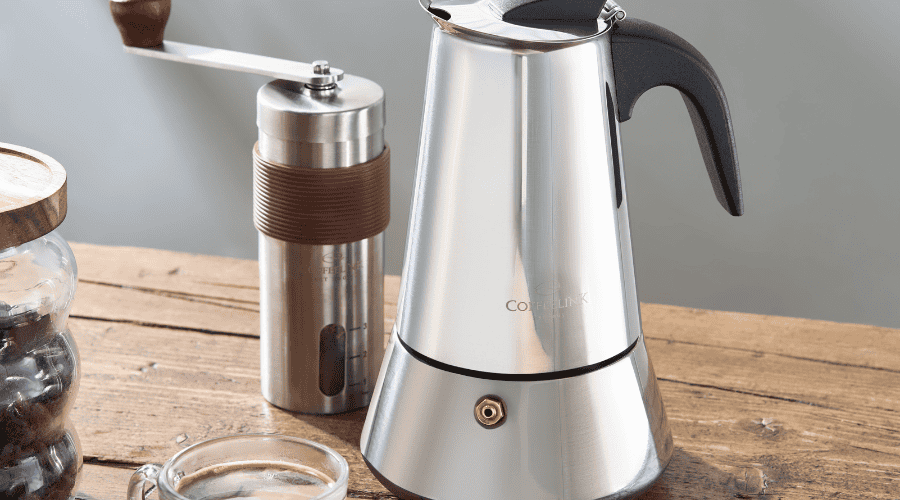
Fill the bottom chamber with cold water up to the safety valve.
Insert the filter basket and fill it completely with fine ground coffee (about 20–22 g for fresh beans), but do not pack it down.
Place the basket into the base, clean any grounds from the rim, and screw the top chamber on tightly. Keep the pot level.
Heat gently on the stove. Remove from heat as soon as coffee starts to hiss and bubble to avoid over-extraction.
Give the coffee a quick stir and serve immediately.
Turkish Coffee:
A traditional method producing an intense, syrupy, full-bodied coffee with fine grounds settling at the bottom. Deeply aromatic, it’s rich, strong, and often lightly sweetened during brewing.
If you want, I can also make one-sentence punchy versions perfect for quick guides or menus.
Turkish Coffee Brewing Instructions:
Add 100 ml of cold water per cup to a Turkish coffee pot (cezve).
Grind coffee beans to an extra fine, powdery consistency, finer than espresso.
Add 1 heaping teaspoon of coffee per cup. Optional: add 1 teaspoon sugar for medium sweetness.
Heat the cezve slowly on low, allowing foam to form but avoiding a boil.
Remove from heat briefly, then repeat the foaming process twice more, being careful not to boil.
After the third foam, let the grounds settle for about 30 seconds.
Pour slowly into a cup so the foam distributes evenly. Grounds will remain at the bottom. Sip carefully.
We hope that you found this helpful. However, if you’d like to learn more about speciality coffee, grind sizes, ratios and what coffees we recommend for each method, download your free copy of The Ultimate Brewing Guide.
P.S. We’re always happy to help! If you need a recommendation or to learn more about our coffee subscriptions, contact our team. We’re always just an email away!
We use cookies to enhance your browsing experience, serve personalised ads or content, and analyse our traffic. By clicking "Accept All", you consent to our use of cookies.
Read More
Cookies are small text files that can be used by websites to make a user's experience more efficient. The law states that we can store cookies on your device if they are strictly necessary for the operation of this site. For all other types of cookies we need your permission. This site uses different types of cookies. Some cookies are placed by third party services that appear on our pages.
For more information on how Google's third party cookies operate and handle your data, see: Google's Privacy Policy
Necessary cookies help make a website usable by enabling basic functions like page navigation and access to secure areas of the website. The website cannot function properly without these cookies.
Marketing cookies are used to track visitors across websites. The intention is to display ads that are relevant and engaging for the individual user and thereby more valuable for publishers and third party advertisers.
Preference cookies enable a website to remember information that changes the way the website behaves or looks, like your preferred language or the region that you are in.